Moore Threads Unveils New AI Chip Generation Post-Record IPO
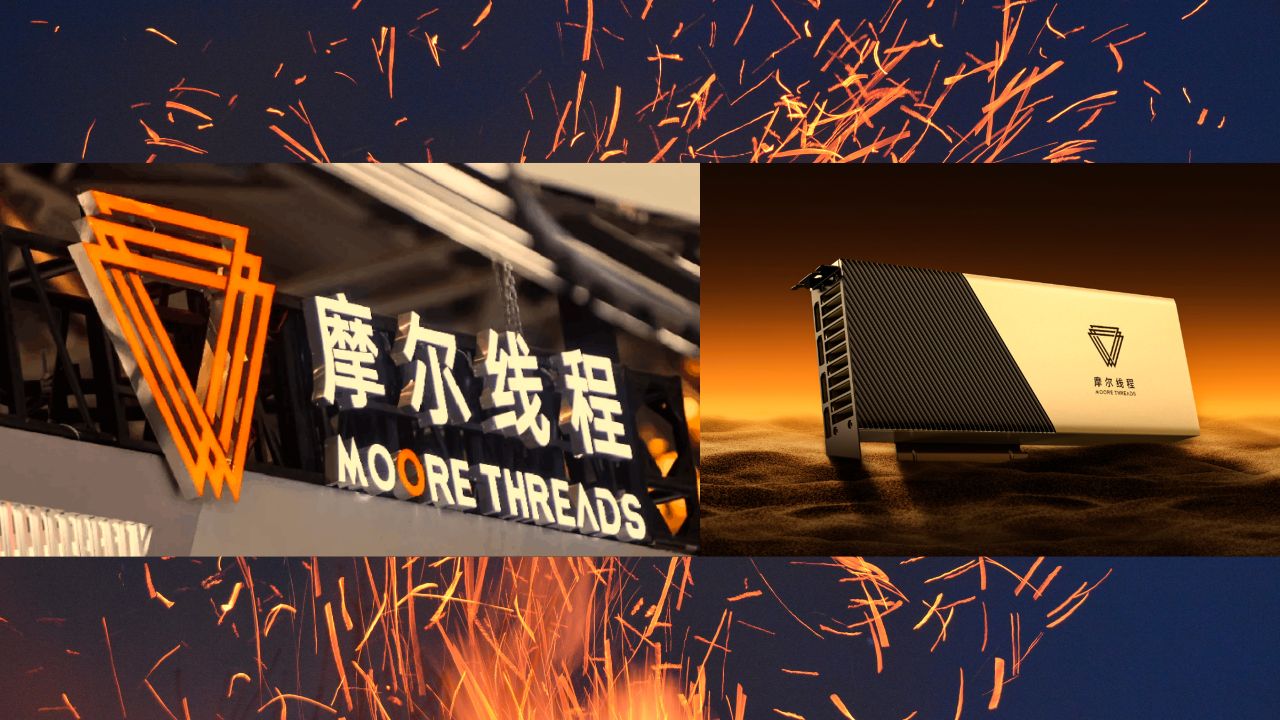
Moore Threads Technology Co., a Beijing-based Chinese GPU designer, unveiled its latest AI chip architecture, named Huagang, on December 20, 2025, at a Beijing event. The new chips, branded Huashan, target direct competition with Nvidia's Hopper and Blackwell series, promising 50% higher computational density and 10x improved energy efficiency. Additional announcements included an updated MUSA computing platform (positioned as a CUDA equivalent), the Lushan series for advanced graphics rendering, and the Changjiang SoC integrating CPUs and GPUs. The company also demonstrated servers scaling to tens of thousands of interconnected AI chips. This follows Moore Threads' December 2025 Shanghai IPO, one of China's most successful recent listings, with shares surging over 400% on debut and raising substantial capital despite U.S. sanctions since 2023.
Significance
The launch highlights China's accelerating push for AI hardware self-sufficiency amid U.S. export restrictions on advanced Nvidia products, demonstrating viable domestic alternatives with large-scale clustering capabilities and ecosystem tools to reduce developer reliance on foreign technology.
People Behind It
Founder and CEO Zhang Jianzhong, a former Nvidia executive who spent 14 years at the company (including as general manager for China operations), established Moore Threads in 2020. His Nvidia expertise drives the firm's full-function GPU strategy.
Implications for Nvidia and Other Major Chip Manufacturers
The Huashan chips and MUSA platform challenge Nvidia's dominance in China, where advanced U.S. GPUs are restricted, potentially eroding Nvidia's market share in the world's largest AI compute consumer. For competitors like AMD and Intel, it intensifies pressure in the global GPU space, while domestic rivals (Huawei Ascend, Cambricon, Biren) face heightened competition for government-backed contracts.
Implications for U.S. AI Chip Dominance
This advances China's semiconductor independence, narrowing the gap in AI accelerators despite sanctions limiting access to leading-edge foundries. It underscores bifurcated global supply chains, with China fostering national champions through capital markets and policy support, challenging long-term U.S. leadership in high-performance computing hardware.
References
- Bloomberg: "Ex-Nvidia Billionaire Unveils New AI Chips After China IPO Debut" – https://www.bloomberg.com/news/articles/2025-12-20/ex-nvidia-billionaire-unveils-new-ai-chips-after-china-ipo-debut
- Financial Post: "Ex-Nvidia Billionaire Unveils New AI Chips After China IPO Debut" – https://financialpost.com/pmn/business-pmn/ex-nvidia-billionaire-unveils-new-ai-chips-after-china-ipo-debut
- Moneycontrol: "Ex-Nvidia billionaire unveils new AI chips after China IPO debut" – https://www.moneycontrol.com/news/business/ex-nvidia-billionaire-unveils-new-ai-chips-after-china-ipo-debut-13735142.html